「Extend App」の脆弱性スキャン
Last updated on July 15, 2026
注釈:本資料はAI技術を用いて翻訳されています。
Overview
AGSは、実行中のExtendアプリのすべてのイメージをスキャンし、潜在的な脆弱性を特定します。AGSはアップロード直後に各イメージをスキャンし、その後は毎週日曜日00:00 UTCに定期スキャンを実行します。各スキャンでは、アプリごとに検出された脆弱性、その深刻度、および推奨される修正方法を示すセキュリティレポートが作成されます。AGSは脆弱性を深刻度別に分類します(低、中、高、致命的)。
これらのレポートにより、Extendアプリのセキュリティ状態を常に把握できるため、更新や修正の優先順位を決めることができます。
ヒント
Extendアプリをサブスクライブすると、致命的な脆弱性が検出された際にメール通知を受け取ることができます。詳細はアラートを有効にするを参照してください。
Extendアプリイメージのスキャン結果を表示する
-
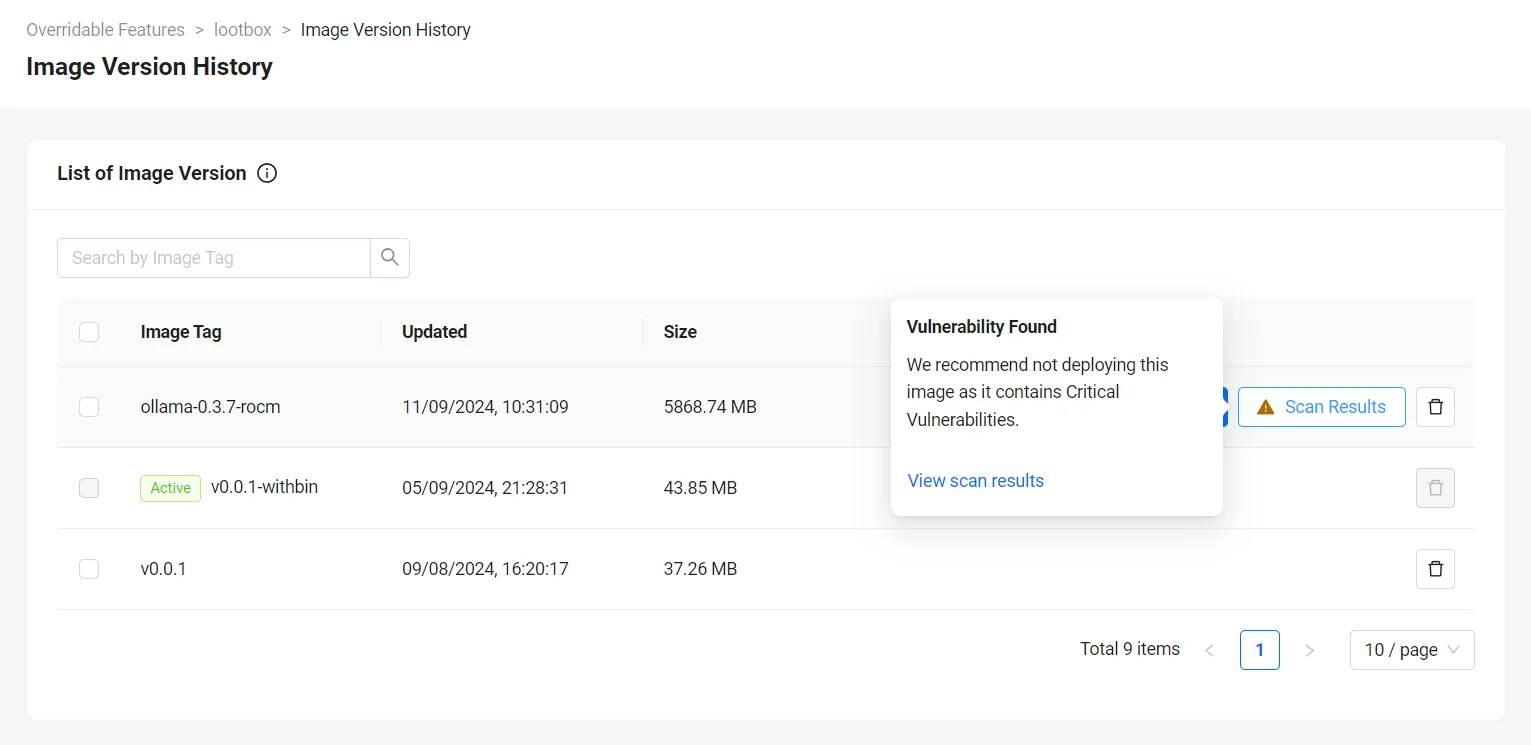
Extendアプリの詳細ページで、Image Version Historyをクリックします。Extendアプリのすべてのイメージバージョンの一覧が表示されます。
-
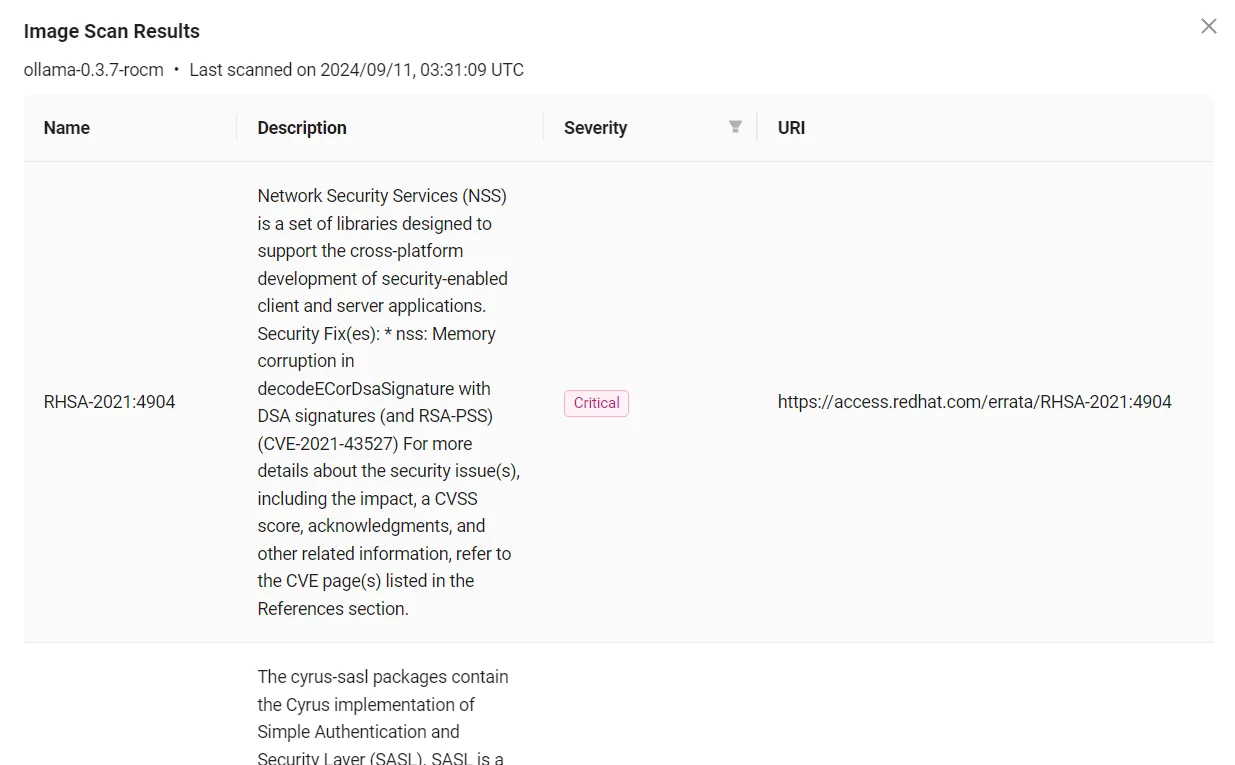
脆弱性が検出されたイメージバージョンには警告アイコンが表示されます。Scan Resultsをクリックすると、そのイメージの完全なセキュリティレポートを表示できます。
注記
AGSがExtendアプリの現在(最新にデプロイされている)のイメージで致命的な脆弱性を検出した場合、アプリの詳細ページの上部にバナーが表示されます。バナーのSee Scan Resultsをクリックすると、完全なレポートを表示できます。
アラートを有効にする
- Extendアプリの詳細ページで、Subscribeをクリックします。
- Image Vulnerabilityを選択すると、致命的な脆弱性が検出された際にメール通知を受け取れます。
- アプリがダウンした際にも通知を受け取りたい場合は、代わりにAllを選択してください。
- 通知を受け取りたくない場合は、Extendアプリのサブスクライブを解除してください。
サブスクライバーの管理方法の詳細については、Extendアプリの通知とサブスクライバーの管理を参照してください。
スキャン結果の深刻度の定義
| 名称 | 説明 | 例 |
|---|---|---|
CRITICAL | 最も深刻なレベルで、脆弱性がシステム全体の侵害につながる可能性があります。直ちに修正することを強く推奨します。 | リモートコード実行を許してしまう脆弱性、未修正のゼロデイエクスプロイト、システムリソースへの完全なアクセスを許してしまう致命的なデータ漏洩など。 |
HIGH | 深刻度が高い脆弱性は重大であり、システムの機密性、完全性、または可用性を損なうために悪用される可能性があります。 | 脆弱な暗号化アルゴリズム、権限昇格につながる可能性のある欠陥、特定の方法で悪用された場合にSQLインジェクションなどの攻撃を受けるリスク。 |
MEDIUM | この深刻度は、中程度のリスクをもたらす脆弱性を示します。悪用されると機能に影響が及んだり、一定の情報漏洩につながる可能性がありますが、致命的とは見なされません。 | 特定のシナリオで悪用される可能性のある問題を持つライブラリ(特定の条件下で攻撃者がデータへの限定的なアクセスを得られるようにするものなど)。 |
LOW | このレベルの脆弱性は軽微なセキュリティリスクを表します。影響は限定的であることが多く、攻撃者が悪用するのも通常は難しくなります。 | バージョンの小さな不一致や、セキュリティに直接影響しない非推奨コードなどの軽微な問題。 |
INFORMATIONAL | このレベルには、直ちに脅威とはならないものの、潜在的な弱点や設定に関する情報を示す脆弱性が含まれます。これらは一般的に優先度が低い項目であり、現時点ではセキュリティに影響しませんが、対応を検討する価値がある場合があります。 | 既知の脆弱性はないものの、ベストプラクティスに従っていない可能性がある古いパッケージ。 |
UNDEFINED | 新たに発見された脆弱性である可能性があり、評価プロセスがまだ進行中です。この脆弱性にはCVEの提供元から優先度が割り当てられていません。 | 分析が不完全であるか、CVSSスコアがなく、影響を判断するためのさらなる評価を待っている、新たに発見された脆弱性。 |